English Home › Clinical Cases & Doctor’s Columns › Doctor’s Column
Does a root-treated tooth really need a crown?
What happens without a crown, and the less invasive alternatives · Seongmo Dental Clinic, Sungshin Women’s University Station · Board-certified specialist in Integrated Dentistry
💡 The short answer. Molars do. A root-treated molar left without a crown is far more likely to fracture under chewing force, and one study reported a sixfold higher rate of tooth loss. Front teeth are an exception when enough tooth structure remains, and a composite filling can be enough. For molars too, Seongmo Dental Clinic first considers an overlay or an endocrown, which remove less tooth than a full crown.
Contents
Why does a root-treated tooth become weaker?
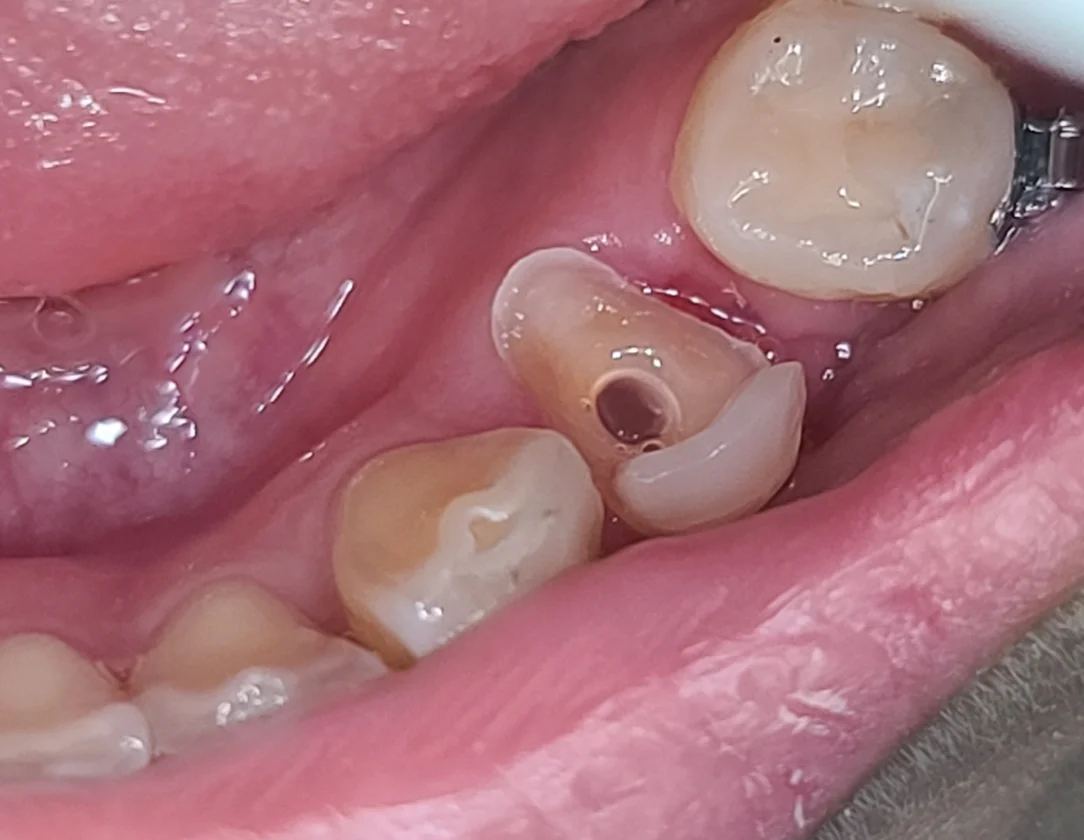
There are two reasons. First, the middle of the biting surface is opened to reach inside the tooth, and removing the original decay as well thins the walls of the tooth. Second, as the nerve and blood vessels disappear, moisture inside the tooth decreases and it loses resilience.
When chewing force is applied repeatedly to thinned walls, the walls spread outwards and eventually crack. Molars take far greater force than front teeth, and the opening in the biting surface acts as a wedge, so the risk is higher. A study finding that root-treated molars without a crown were lost at six times the rate of crowned teeth illustrates this risk well.
Do front teeth need a crown as well?
Front teeth are an exception. They take less chewing force and have a single canal, so the access opening is small too. If the decay was not large and both walls of the tooth remain, filling the opening with composite is often enough.
Even so, a front tooth whose walls are largely gone from extensive decay, or that is heavily discoloured, or that has already had several large fillings, is safer covered with a crown or a laminate veneer.
Is there an alternative to a crown?
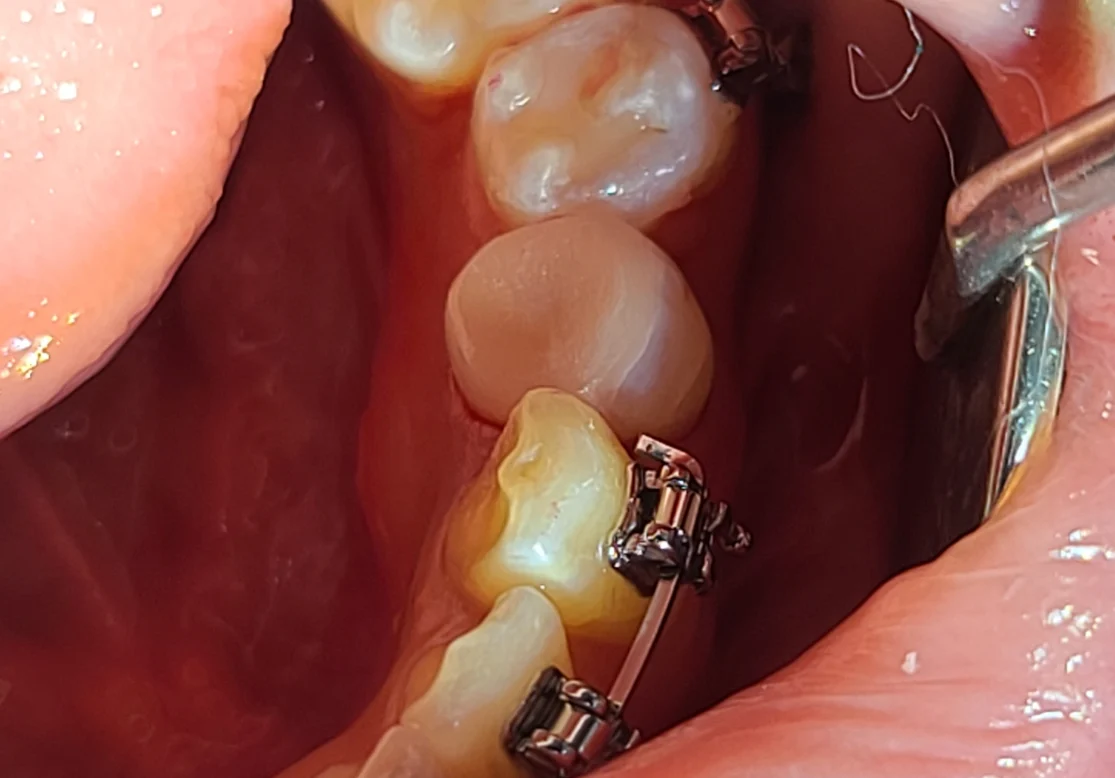
Yes. A crown requires preparing the tooth all the way around, but when enough tooth structure remains there are less invasive options.
- Overlay — covers the biting surface and the cusps while leaving the side walls. It protects against fracture where the chewing force acts, while preserving tooth structure.
- Endocrown — a single piece of ceramic that extends into the canal orifice without a metal post. Suited to molars with low remaining walls.
The criterion is the ferrule. If a band of sound tooth structure 1.5 to 2 mm or more remains above the gum, a crown or an overlay will last. Seongmo Dental Clinic uses this criterion to consider first whichever of crown, overlay or endocrown removes the least tooth. The differences are set out on the special treatments page.
Is a post always necessary?
When little tooth structure remains, a core is needed to hold the crown. Seongmo Dental Clinic builds the core from glass-fibre reinforced composite rather than a metal post, because it has elasticity similar to the tooth and so does not act in a direction that splits the root when force is applied. Why a root-treated molar can still fracture even with a crown, and the role of a glass-fibre core, are recorded in our clinical cases.
When is the best time to cover it?
The sooner the better. Leaving a tooth under a temporary filling for months invites reinfection through the leaking gap, or the tooth cracks before it can be covered and a savable tooth ends up extracted. With in-house Primescan, Primemill and SpeedFire, Seongmo Dental Clinic finishes the crown on the last day of root canal treatment, so there is no temporary-crown period at all. The process is on the one-day crown page and costs on the non-covered fee guide. Ceramic crowns, overlays and endocrowns carry a 4-year warranty on the basis of regular check-ups; zirconia crowns carry 1 year.
More than whether to cover it, how little tooth is removed and how quickly it is covered decide the life of the tooth. 30 seconds on foot from Exit 2 of Sungshin Women’s University Station, 02-922-3966.
Frequently asked questions
What happens if I do not put a crown on after a root canal?
For molars, the risk of the walls fracturing under chewing force rises sharply. If the fracture line runs into the root, the tooth cannot be saved and has to be extracted.
How soon after a root canal should the crown be placed?
As soon as possible after sealing is safest. Seongmo Dental Clinic completes the crown in-house on the day of sealing, eliminating any period spent in a temporary state.
Can an inlay be used instead of a crown?
An inlay that does not cover the biting surface cannot prevent a root-treated molar from fracturing. If you want less tooth removed, an overlay or an endocrown that covers the cusps is the alternative.
Is the crown after a root canal covered by insurance?
Crowns are non-covered. Costs by material are published on the non-covered fee guide, with a 4-year warranty for ceramic and 1 year for zirconia.
Related information
Seongmo Dental Clinic opened in 1998. I have held this position as the third director since April 2022, and I have one standard for choosing equipment: if I would not use it on my own family, I do not use it on my patients. One more scanner must not mean more treatment. If anything, it should mean cutting less, extracting less and finishing in one visit, from a more accurate original. The goal is not to be first with new equipment, but to offer the better of what is possible today to the patient sitting in the chair.
📍 3rd floor, 2 Dongsomun-ro 20ga-gil, Seongbuk-gu, Seoul
🚉 30-second walk from Exit 2, Sungshin Women’s University Station (Parking: up to 2 hours at Utah Mall)
📞 +82-2-922-3966
📅 Mon/Wed/Fri 09:30–18:30 · Tue 09:30–20:00 (evening clinic) · Sat 09:30–14:30 (no lunch break) · Weekday lunch 13:00–14:30 · Closed Thu, Sun and public holidays
💬 Booking and enquiries: Naver Booking · Naver Talk · KakaoTalk channel · English page
🟡 Opened in 1998; third-generation director in charge of care since April 2022
⚕️ This article was written for information purposes in line with Korean medical law and the Ministry of Health and Welfare’s medical advertising standards. Equipment specifications given here come from the manufacturer’s official material and the figures on accuracy and comfort are values reported in academic literature; the outcome and course of individual treatment vary with the condition of the mouth. Please decide on a specific diagnosis and treatment plan after consulting your treating clinician.
This article was written as of August 2026. Equipment specifications and cost-related content are reviewed and updated every three months.