English Home › Clinical Cases & Doctor’s Columns › Doctor’s Column
Is pain after a root canal normal?
How many days is normal, and when to come back · Seongmo Dental Clinic, Sungshin Women’s University Station · Board-certified specialist in Integrated Dentistry
💡 The short answer. Discomfort on biting for 2 to 3 days after a root canal is normal and usually eases within a week. Spontaneous throbbing at night, gum swelling, or pain lasting more than two weeks is outside the normal range. In those cases Seongmo Dental Clinic checks for missed canals, cracks or reinfection with CBCT and treats according to the cause.
Contents
Why does it hurt when the nerve has been removed?
A root canal removes the nerve inside the tooth; it does not remove the tissue outside the root tip. At the root tip there is a ligament and bone that hold the tooth, and during treatment the instruments, irrigants and filling material irritate this tissue. That is why a dull or pressed feeling on biting, from the evening of treatment for 2 to 3 days, is a natural reaction.
A tooth that already had inflammation at the root tip takes longer for that inflammation to settle. If there was swelling or pus before treatment, discomfort can continue for up to one or two weeks.
How many days is normal?
- Days 1 to 3 — dull ache and pressure on biting. Within the normal range if it is controlled by the prescribed analgesic.
- Days 4 to 7 — the pain should be heading downwards.
- After 2 weeks — if pain on biting is unchanged or worse, it needs to be checked.
The criterion is direction rather than intensity. Pain that is decreasing can be waited out; pain that is increasing should not be.
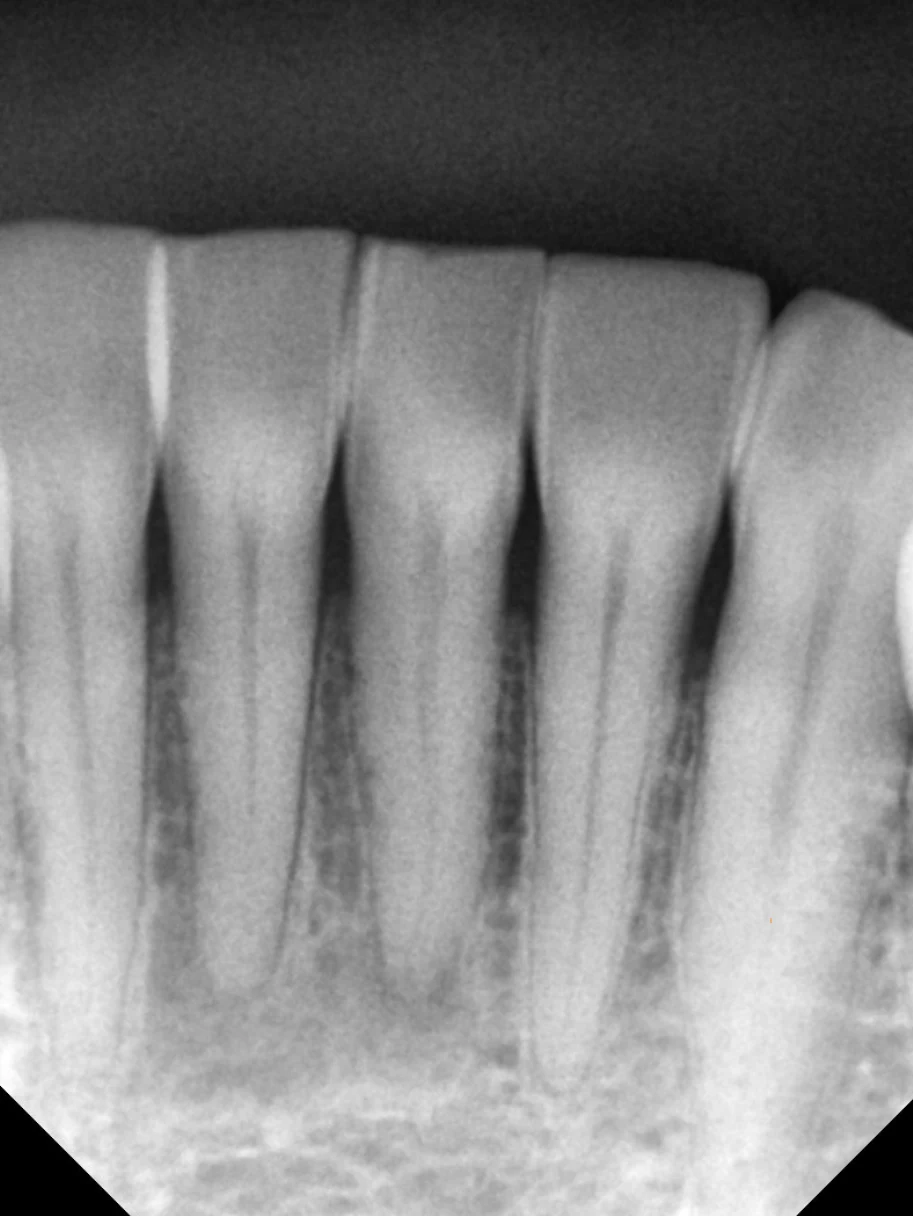
What kind of pain is not normal?
If any one of the following four is present, you should come in.
- Spontaneous throbbing at night — pain arising without a stimulus suggests remaining infection inside the canal or a missed canal.
- Swollen gums or discharge of pus — inflammation at the root tip is not under control.
- Prolonged pain with heat — a common pattern when untreated nerve tissue remains.
- A sharp twinge only when biting on one spot — a crack in the tooth should be checked first.
Rarely, an acute flare-up with sudden severe swelling and pain occurs a day or two after treatment. In that case reopening the canal and disinfecting it usually settles it quickly.
How is persistent pain investigated?
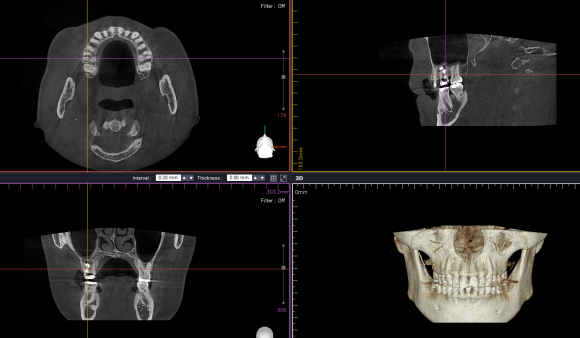
Seongmo Dental Clinic looks at a tooth with continuing pain in the following order. First the occlusion. If the temporary filling or the crown is high so that tooth contacts first, it hurts on biting; adjusting the height alone solves it. Next, CBCT. A fourth canal that overlaps on a plain radiograph, inflammation at the root tip, or a root crack shows up on CBCT. Finally the adjacent teeth and gums. A root-treated tooth has no sensation, so continuing sensitivity or pain may come from a neighbouring tooth or the gums.
If a missed canal or reinfection is confirmed, retreatment is carried out. Seongmo Dental Clinic applies Plazen plasma disinfection in retreatment as well, to reduce the remaining bacteria. The judgement between retreatment and extraction is set out on the special treatments page.
What can I do at home?
The basics are not to chew anything hard on the treated side, and to take the prescribed analgesic on schedule. If the temporary filling comes out, come in straight away even without pain: once bacteria get in through the gap, treatment has to start over. A tooth that has finished root canal treatment must be covered with a crown so it does not crack, and Seongmo Dental Clinic makes the crown in-house on the day of sealing so there is no window for reinfection. The process is on the root canal treatment and one-day crown pages.
If you are not sure whether the pain is normal, having it checked is better for the tooth than waiting. 30 seconds on foot from Exit 2 of Sungshin Women’s University Station, 02-922-3966.
Frequently asked questions
How many days does pain after a root canal usually last?
A dull ache on biting usually lasts 2 to 3 days and mostly eases within a week. A tooth that had swelling or pus before treatment can stay uncomfortable for one to two weeks.
Can I take painkillers after a root canal?
Taking the prescribed analgesic on schedule helps recovery. Pain that is not controlled by the analgesic, or that keeps getting worse, needs to be seen.
My root-treated tooth hurts with heat — is that normal?
It is not within the normal range. Prolonged pain with heat is a common pattern when untreated nerve tissue remains, so it needs to be checked.
If it keeps hurting after a root canal, does the tooth have to be extracted?
Usually not. Occlusal adjustment, retreatment and apicoectomy are considered in that order first; extraction is chosen only when there is no other option, such as a vertically fractured root.
Related information
Seongmo Dental Clinic opened in 1998. I have held this position as the third director since April 2022, and I have one standard for choosing equipment: if I would not use it on my own family, I do not use it on my patients. One more scanner must not mean more treatment. If anything, it should mean cutting less, extracting less and finishing in one visit, from a more accurate original. The goal is not to be first with new equipment, but to offer the better of what is possible today to the patient sitting in the chair.
📍 3rd floor, 2 Dongsomun-ro 20ga-gil, Seongbuk-gu, Seoul
🚉 30-second walk from Exit 2, Sungshin Women’s University Station (Parking: up to 2 hours at Utah Mall)
📞 +82-2-922-3966
📅 Mon/Wed/Fri 09:30–18:30 · Tue 09:30–20:00 (evening clinic) · Sat 09:30–14:30 (no lunch break) · Weekday lunch 13:00–14:30 · Closed Thu, Sun and public holidays
💬 Booking and enquiries: Naver Booking · Naver Talk · KakaoTalk channel · English page
🟡 Opened in 1998; third-generation director in charge of care since April 2022
⚕️ This article was written for information purposes in line with Korean medical law and the Ministry of Health and Welfare’s medical advertising standards. Equipment specifications given here come from the manufacturer’s official material and the figures on accuracy and comfort are values reported in academic literature; the outcome and course of individual treatment vary with the condition of the mouth. Please decide on a specific diagnosis and treatment plan after consulting your treating clinician.
This article was written as of August 2026. Equipment specifications and cost-related content are reviewed and updated every three months.